Former Patrons.
HM Queen Adelaide 1845 to 1847.
HM Queen Victoria 1847 to 1901.
& HRH The Prince Albert The Prince Consort 1847 to 1861.
HM King George V 1911 to 1936.
(Commodore for 15 years as Duke of York and Prince of Wales 1895 to 1910.)
HM King George VI 1936 to 1952.
Annual regattas at Harwich providing racing events for both yachts and working boats had been organised since 1828 when, in 1843, a yacht club was formed to run them. The so called Eastern Yacht Club carried on for the next two years running these annual events. In 1845 its Rear Commodore, William Knight who was well connected in London through the Inns of Court, arranged for Royal Patronage, securing the Dowager Queen Adelaide (King William IV’s widow) as patron. ( Plate 1. “The Dowager Queen Adelaide.”)
The club was renamed the Royal Harwich Yacht Club and an Admiralty Warrant was also obtained giving its sailing members significant privileges in the form of mooring rights, exemption from lightage fees and free pratique in various foreign ports. Ready-built premises existed on the seafront at Harwich in the form of the Baths and Club Room which overlooked the harbour entrance, ideal for the signalling activities which were a significant part of yacht club life at that period. With these advantageous facilities the Club quickly attracted members from both racing enthusiasts and cruising types. (Plate 2. “The Baths and Club Room, circa 1850.”)
The RHYC defaced ensign with its prominent golden lion rampant was soon to be seen in many parts of the world; none more surprising, perhaps, than within the Arctic Circle. After repeated Admiralty attempts to discover the fate of Sir John Franklin’s expedition to the North West Passage, his widow commissioned a private expedition in 1857, fitting out the steam yacht “Fox”. Under the command of Captain Mclintock the “Fox” set off for the Arctic wearing Royal Harwich Yacht Club colours. The two year expedition failed to discover the exact fate of Franklin. That information had to wait for another one hundred and fifty years. However, this RHYC connection heralded further Royal Harwich involvement in Polar exploration; Captain Nares to the North in the 1880s, Prince Luigi di Savoia to the North in 1898, Scott’s first expedition to the South in 1900, and the Norwegian-British-Swedish expedition of 1949.
As the 19th. century progressed the Harwich regatta became increasingly popular, attracting racing yachts from the South Coast yachting centres, establishing the Royal Harwich as one of the leading racing yacht clubs in the country. This national reputation was about to go global with the appearance of James Ashbury on the racing scene. Ashbury was an ambitious racing yacht owner, fresh to the yachting scene, but established as a successful business man in the railway industry. In 1869 he enjoyed a fruitful racing season with his schooner the “Cambria”, and was appointed as Commodore of the Royal Harwich Yacht Club. His 1869 successes included a convincing win in the around the Isle of Wight against two of America’s fastest schooners. (Plate 3. “The Cambria wins around the Isle of Wight in 1869.”)
This prompted him to challenge for the America’s Cup in 1870, the first challenge for the Cup since the “America” had lifted it as the Queen’s Cup in 1852. Although this initial challenge was through the Royal Thames Yacht Club, Ashbury raced across the Atlantic in a duel against his arch American rival, James Gordon Bennett, under Royal Harwich colours, unexpectedly winning the boat for boat match against Bennett’s larger and faster schooner, albeit by the smallest of margins. Pitted against the entire New York Yacht Club fleet, Ashbury failed to win the Cup, but tried again in 1870 with a new schooner, the Livonia, this time challenging through the Royal Harwich Yacht Club. In a bitterly contested series of boat for boat races against a pool of defending schooners he again failed to lift the trophy despite one win and other claims of victory. Upon his return home Ashbury bombarded the NYYC with some extremely volatile correspondence creating a unfortunate precedent for many subsequent America’s Cup challenges. The Royal Harwich Yacht Club was more happily involved in the America’s Cup in 1920 when their Vice Commodore, Sir William Burton, helmed Lipton’s fourth “Shamrock”, coming within one race of winning the famous trophy. (Plate 4. “Shamrock IV’s racing burgee from the 1920 America’s Cup races.”)
By the end of the 19th. century the Harwich Regattas had become the opening event for each season’s Big Yacht Class attracting most of the famous racing yachts of the time, including the “Britannia” owned by the Prince of Wales (later King Edward VII). His son, George Duke of York, also a keen and knowledgeable yachtsman, was appointed as Commodore of the Royal Harwich Yacht Club in 1895. He continued in this post as Prince of Wales until his accession to the Throne in 1910 after which he became the Club’s Royal Patron until his death in 1936. After the first World War the “Britannia” enjoyed an incredibly successful racing career under the ownership of King George V, and was regularly seen at Harwich racing in the regattas and in the Southend to Harwich “Down Swin” event. (Plate 5. “HM King George V helms the Britannia.”)

There is no doubt that, had it been not for George V, big yacht racing would have died in the inter-war years. His campaigning of the “Britannia” spurred on the handful of yachtsman with big boats to race, and the Harwich regattas continued to attract this class, albeit in smaller numbers than before. The new J class “Endeavour” underwent race trials at the 1934 Harwich Regatta before coming close to gaining the America’s Cup later that year. During the 1930s most of the British J Class yachts raced at Harwich ably supported in the regattas by the 12 metre fleet headed by Sir William Burton, now Commodore of the RHYC. (Plate6. “Sir William Burton at his 12metre helm.”)
Smaller racing yachts also began to make regular appearances at this time. Then the second World War suddenly curtailed all yacht racing for six years. During the war, the Royal Harwich completely closed down. From the latter half of the 19th. century until 1939 the Club had no permanent premises since the old club rooms had been demolished in the expansion of the Navy Yard at Harwich. Various Harwich hotels had been used as RHYC headquarters, in particular the Great Eastern Hotel where all club valuables, archives and papers were stored during the war.
The immediate years after the war were a difficult time for yachting generally. Money to spend on any form of recreation was short, and materials for building yachts virtually unavailable. Fortunately for the Royal Harwich help was at hand from Austin Farrar, yacht and rig designer, and boatyard operator. Having acquired a yard at Woolverstone on the River Orwell between Ipswich and Harwich, he generously offered the RHYC a chance to re-form on part of the land, using wartime Nissen huts as a club house. So, with the first permanent premises since the mid 19th. Century, a hard core of members were able to establish racing from the Club once again. In 1937, a one design fleet of open keel boats designed by Robert Clark and Austin Farrar had been commissioned by the Club. This small fleet of seven boats (soon to be increased to eight) formed the basis for keel boat and dinghy racing from the Club in 1946. (Plate 7. “Royal Harwich One Design, 1937.”)
By 1950 there were sufficient classes racing in Woolverstone to hold the first Woolverstone Regatta. Royal Harwich One Designs, Fireflies, Swordfish and Yachting World cadets formed the classes. This was a new type of racing far more available to ordinary members than the big boat racing of the previous decades. This regatta launched the Club into a period of expansion in the 1950s. King George VI had given his consent to be the Club’s patron, the Nissen huts were extended and modernised, old club paintings were hung once again, archives and book collections formed the basis for a new library, and thus the identity of the Royal Harwich was both preserved and modified at the same time.
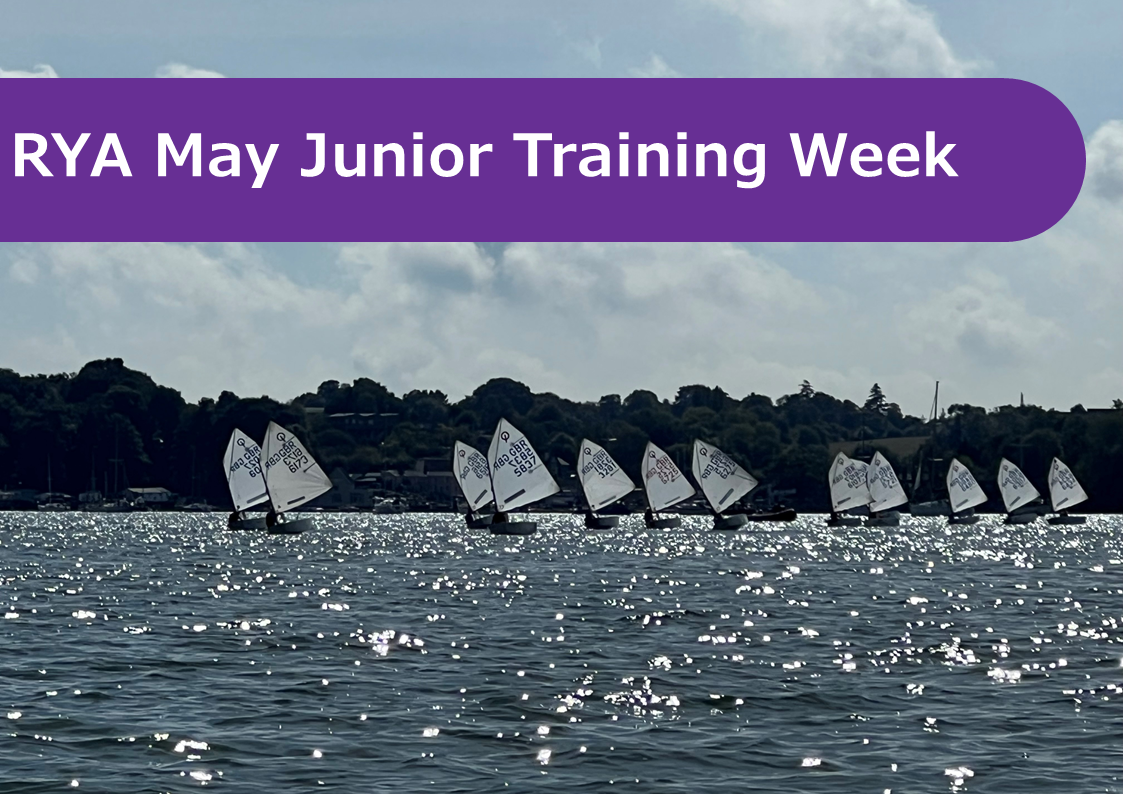
During the 1950s the two established dinghy classes racing from the RHYC were the Swordfish and Firefly classes. Amongst the Swordfish dinghies kept at Woolverstone was one owned by Cambridge University Cruising Club whose members regularly supported the racing from the Club. Dinghy classes tend to ebb and flow in popularity, and apparently nowhere more so than at the Royal Harwich. As the ‘50s slid into the ‘60s and ‘70s the National 12, a development class originally fostered by Sir William Burton, displaced the Firefly and Swordfish fleets together with Enterprises, Wayfarers and Mirrors, particularly popular with an increasingly strong Junior Sailing contingent in the Club. Then in the 1980s Lasers, Toppers and Optimists established themselves on the scene. In the 1980s the RHYC produced national champions in both National 12 and Optimist competition; a healthy result for both adult and junior members.
Alas, on the open keel boat racing front the Royal Harwich One Design fleet of eight boats, although keenly raced, did not attract sufficient support for more boats to be built for the class. This was remedied in 1967 when the Ajax One Design class was introduced the RHYC. This twenty three foot open keel boat was a recent design from the board of Oliver Lee. Being manufactured in GRP it proved a popular boat with club members as it was less expensive to purchase than a new wooden RHOD, and presented a more modern sailing image. As the Ajax fleet steadily grew in strength the RHOD fleet declined, although a handful of dedicated wooden boat enthusiasts in the Club have managed to ensure that the fleet has raced up to the present time without missing a single season. The Ajax fleet is now the single largest fleet of yachts racing from the RHYC today. (Plate8. “Ajax One Design.”)
Meanwhile larger racing yachts had been gradually making a come-back so that by 1972 it had been possible for the Royal Harwich, and Walton-and-Frinton Yacht Clubs together with the Waldringfield Sailing Club to start offshore racing once again from Harwich Harbour. Initially known as the Medusa Series these successful races became known as the Haven Series. Twenty one years earlier the East Anglian Offshore races had started and proved successful, but catered mainly for yachts racing medium to long distances from port to port, often through the night, whereas the new Haven Series provided offshore day races popular with skippers and owners with less free time on their hands. Also, the start of the Haven Series coincided with a new construction of yachts, no longer in timber, but in GRP and other composite materials, increasing their availability and leading to larger fleets for this popular racing. (Plate 9. “Haven Series racing.”)
But the Royal Harwich had not contained its racing activities to dinghy, keel boat and offshore racing alone. Two members completed solo circumnavigations; James Hatfield in 1987 and Josh Hall in the BOC Global Challenge races of the 1980s and ’90s. Earlier in the Club’s history, club member Alan Villiers with a crew of young people had completed a circumnavigation in the Conrad from 1934 to ’36. It was also Alan Villiers who skippered the Mayflower II from Plymouth to America in 1952.
Thus, within only twenty odd years of re-opening after the war, the Royal Harwich was able to its offer members a pretty full variety of yacht racing. With this came the demand for something rather more appropriate as a club house than old wartime Nissen huts. So in 1969 a smart new clubhouse was opened on the Woolverstone site. With various later additions, this structure has lasted to this day providing facilities for members and visiting yachtsmen alike. (Plate 10. “The Royal Harwich Yacht Club at 6 Woolverstone.”)
With the improved club premises came in 1993 a most important decision for the Club. The construction of a Royal Harwich Yacht Club Marina with floating pontoons stationed at the bottom of the Club Lawn was proposed and accepted by club members after considerable debate. With its own marina together with a number of swinging moorings and laying-up on shore facilities the Club is able to offer to cruising and offshore racing members a complete package of yacht management. This has had a great impact, encouraging a thriving cruising element with club organised cruises in company becoming a popular and vital part of its activities. Now club members cruise way beyond the confines of the East Coast recording passages to all parts of the UK as well as further a field to the Continental Coast, the Baltic, Mediterranean, Black Sea and Caribbean. So once again the Royal Harwich Lion Rampant spans the world’s seas as it had at its outset in the mid 19th. century.
B.A.M
see also Regatta Dinner / James Ashbury's / Britannia for more history